Preface
I have been walking toward Rome most of my life.
It began in the local library by the Ganaraska River. A boy at a desk, slowly turns the pages of a heavy book, lip-reads the Sumerian Epic of Gilgamesh: He who saw the deep, the regions of the world, saw everything.
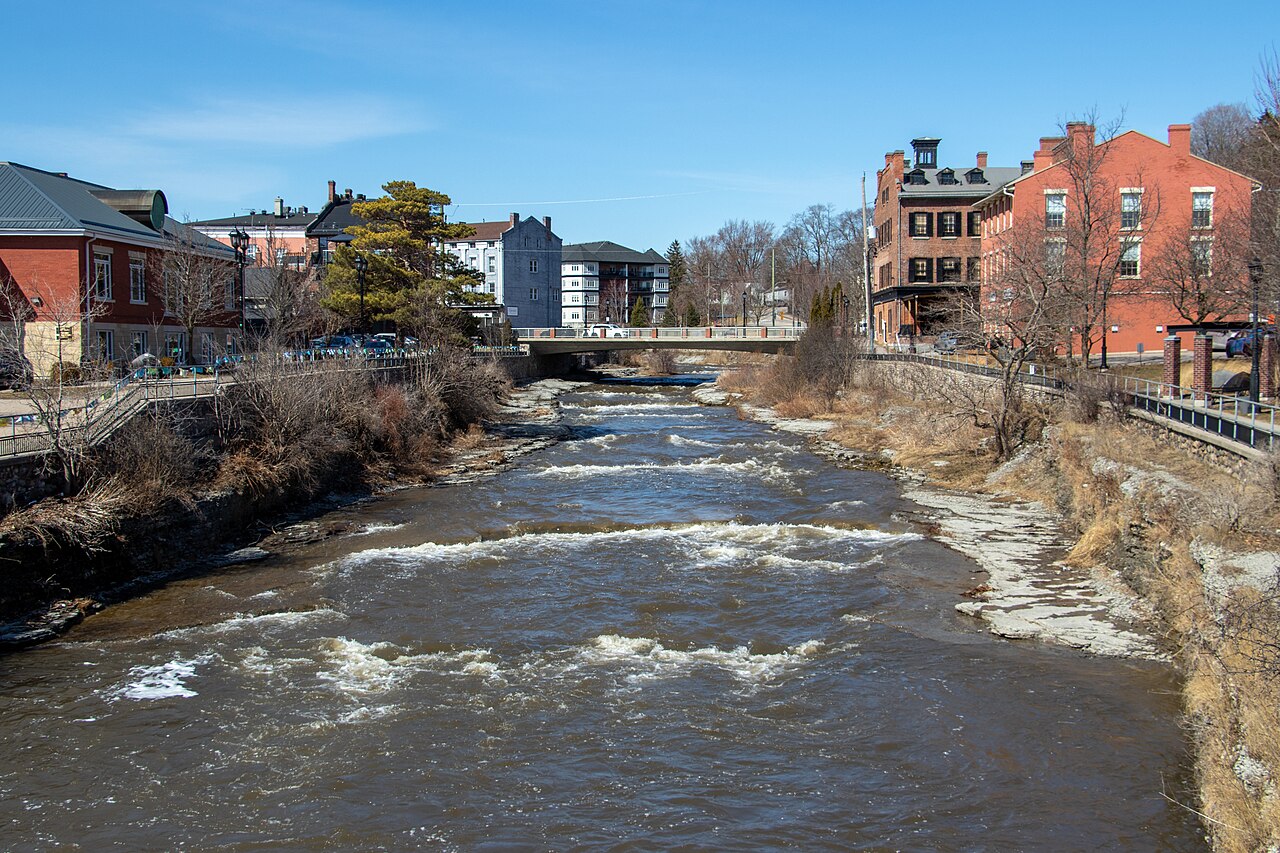
The boy asks “can I find Sumer on the map?”
He points. The librarian takes down a volume about hieroglyphics. The sideways feet are funny but the stories are good.
Another day he’s in the Great Pyramid, enters the long passageway. His candle flickers. Up, across, up again. Will he suffocate? Finally, the king’s tomb chamber. Alas, it’s empty.
Babylonia. Hammurabi. The Hittites. The I Ching.
After school he gardens for the old lady down the lane. Thirty-five cents for an hour. She smiles. Gives him little round pieces of colorfully wrapped cheese he’s never seen before. He walks home through the back gate, where the asparagus grows. His mother approves the cheese. He can afford to buy a book.
The Rigveda. The Upanishads. The Old Testament. He knows it from years in the church choir. The Iliad. The Odyssey.
Herodotus. The Father of History.
Hmmm. He sees the name Cicero.
Another book. A different door: Rosemary Sutcliff. The Eagle of the Ninth.
That was me. I stopped at ancient Rome. So many amazing stories. I’ve never left.
At nineteen, being of English blood, I visited Brittannia and Londinium, first staying at Southend-on-Sea with my uncle Tim.
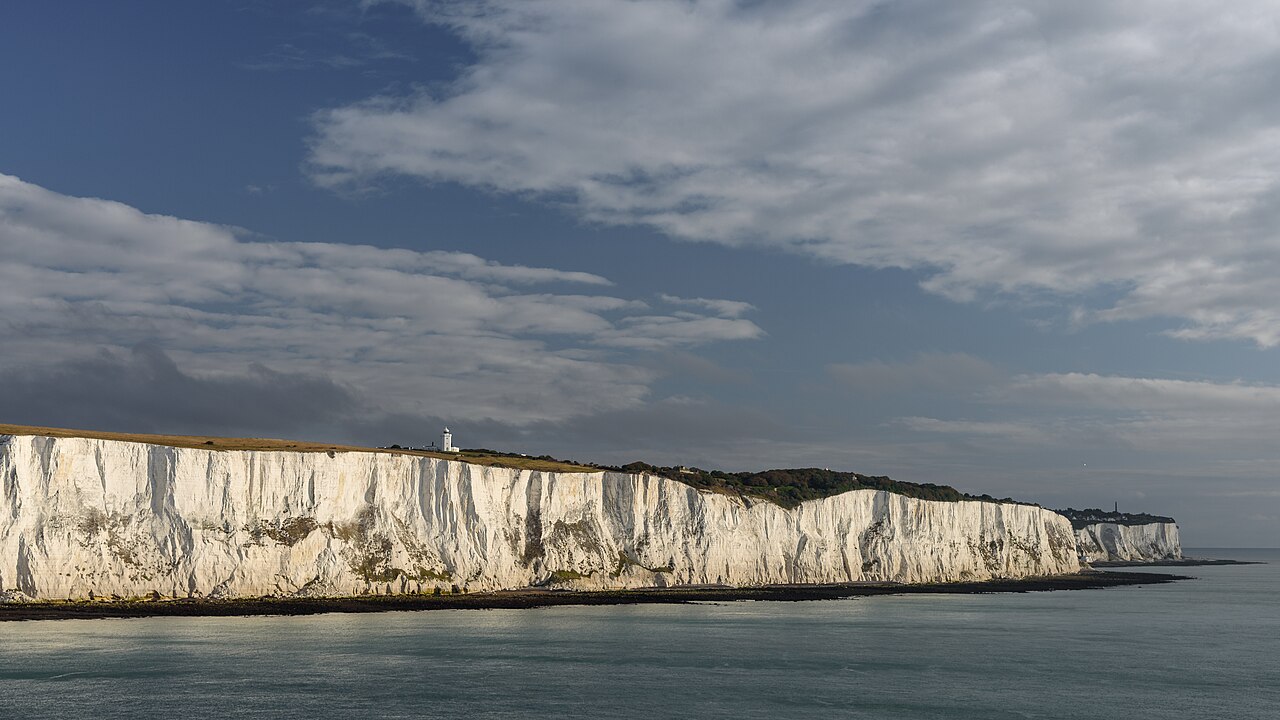
Then I took the ferry to Belgium—Gallia Belgica. It was a rough crossing. I thought of Julius Caesar.
Landing in Zeebrugge, I soon fell in love with Bruges, and ended up in Brussels.
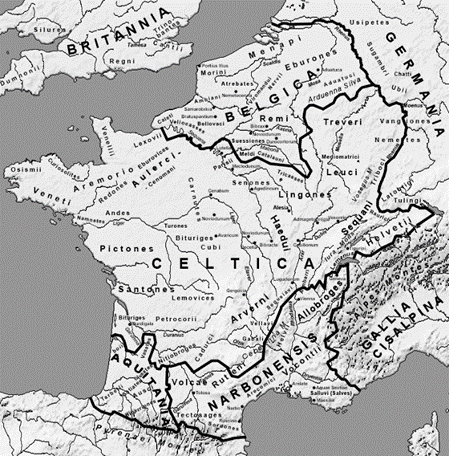
In 57 BC, with eight legions, Caesar campaigned against the Belgic tribes—the Suessiones, Nervii, Bellovaci and Aduatuci. He called the Belgae the bravest of the Gauls, tough warriors, un-softened by trade and luxuries.
Another crossing, up through Kent to London. I worked, bought an old car, drove with my friend to Bradford and Bingley, saw the Moors.
Driving back, the windows fell into the doors during a wonderful British rainstorm.
Years later, Mary and I landed at Rome Fiumicino and drove north into Tuscany, to a thousand-year-old villa overlooking vineyards, orchards and rolling hills. I stood on the terrace with the curious feeling that I had arrived in a place I already knew.
One day I was inside an Etruscan tomb, as long as I could, quietly drinking Italy in.
Since then, Mary and I have walked Roman roads together in Britain, France, Spain, Portugal, Czech Republic, Germany, Poland, the Holy Land and, of course, Italy itself.
We have wandered through Pompeii in the early morning, walked by the estate of Julia Felix, explored Ostia Antica, the ruins of Italica and the ancient streets of Diocletian’s Palace at Split.
But this book is not about my travels. It’s about theirs.
The Romans left us buildings, roads, art and histories. They also left us something perhaps more remarkable. Their voices.
When Cicero describes the astonishing celestial sphere designed by Archimedes, he knew it first-hand. Seneca complains about the noise of the public baths beside his rented rooms. We hear every day Rome. Ovid writes from exile near the Black Sea where Scythian descendants walked, we feel his profound loneliness—the fear that he may never again see his beloved family, friends and city.
Rome’s voices never stop.
This book invites you to meet them.
Archaeology will guide us. Their writers will speak with us. Discoveries from buried cities to the extraordinary Antikythera Mechanism from the sea floor will remind us that the ancient world still reveals secrets.
Shall we walk?
Italica
Come with me to Hispania Baetica.
Something extraordinary happened here—something that changed the way one can look at the ancient world forever. We are about to walk together through the magic of ancient Spain and forward through time to the present moment.
When I was a boy in the library by the Ganaraska River, Hispania was a name on a map—one more doorway into a world I could enter only through books. Decades later Mary was beside me in Seville. The place that had once existed for me in print now had spring light, purple blossoms and streets beneath our feet.
Are you ready? Shall we go, my friend? Hang on to your broad-brimmed hat.
It is spring in Seville, Andalusia. Bright blossoms shower us with purple light high above the main street. Mary and I wander through the park surrounding the Archaeological Museum before going inside, where Roman mosaics cover the floors and busts of local dignitaries watch from the galleries.
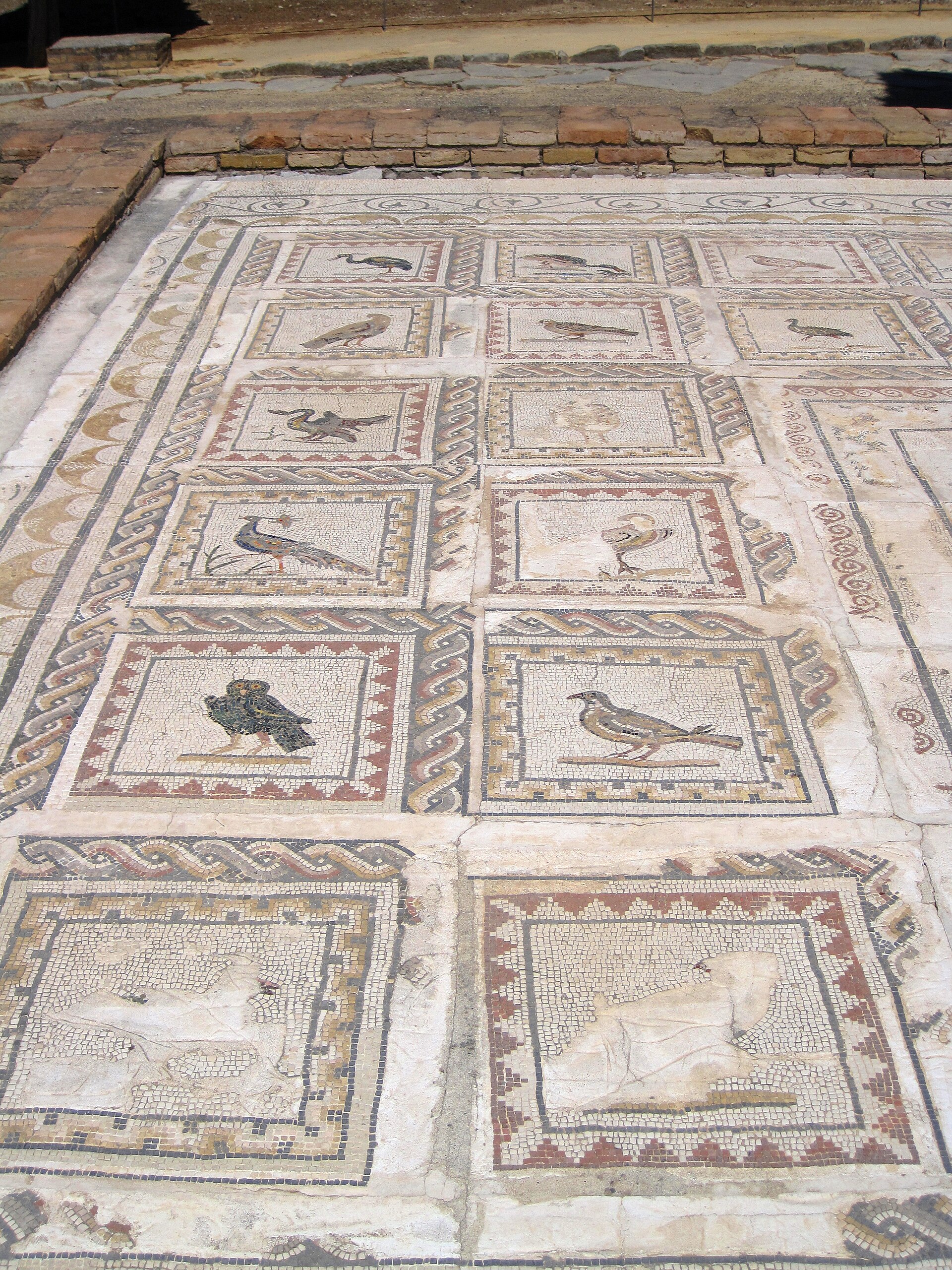
Venus, the goddess, emerges from the sea accompanied by a dolphin. Her head is missing, yet the surviving figure retains its serenity. Nearby, busts of the emperors Trajan and Hadrian dominate the gallery, as they once dominated the Roman world. Both men were born nearby, at its western edge.
From Seville we drive there, a few miles north to Italica. Founded in 206 BC as the Second Punic War ground toward its conclusion, it became Rome’s first permanent settlement in Hispania.
There are few tourists. It is wonderfully quiet.
Mary and I do not always pause for the same things. I am drawn toward an inscription, a broken column, the line of a Roman road. Mary notices the human detail—the doorway, the garden, the place where ordinary life might once have unfolded. Walking together, we see more than either of us would see alone.
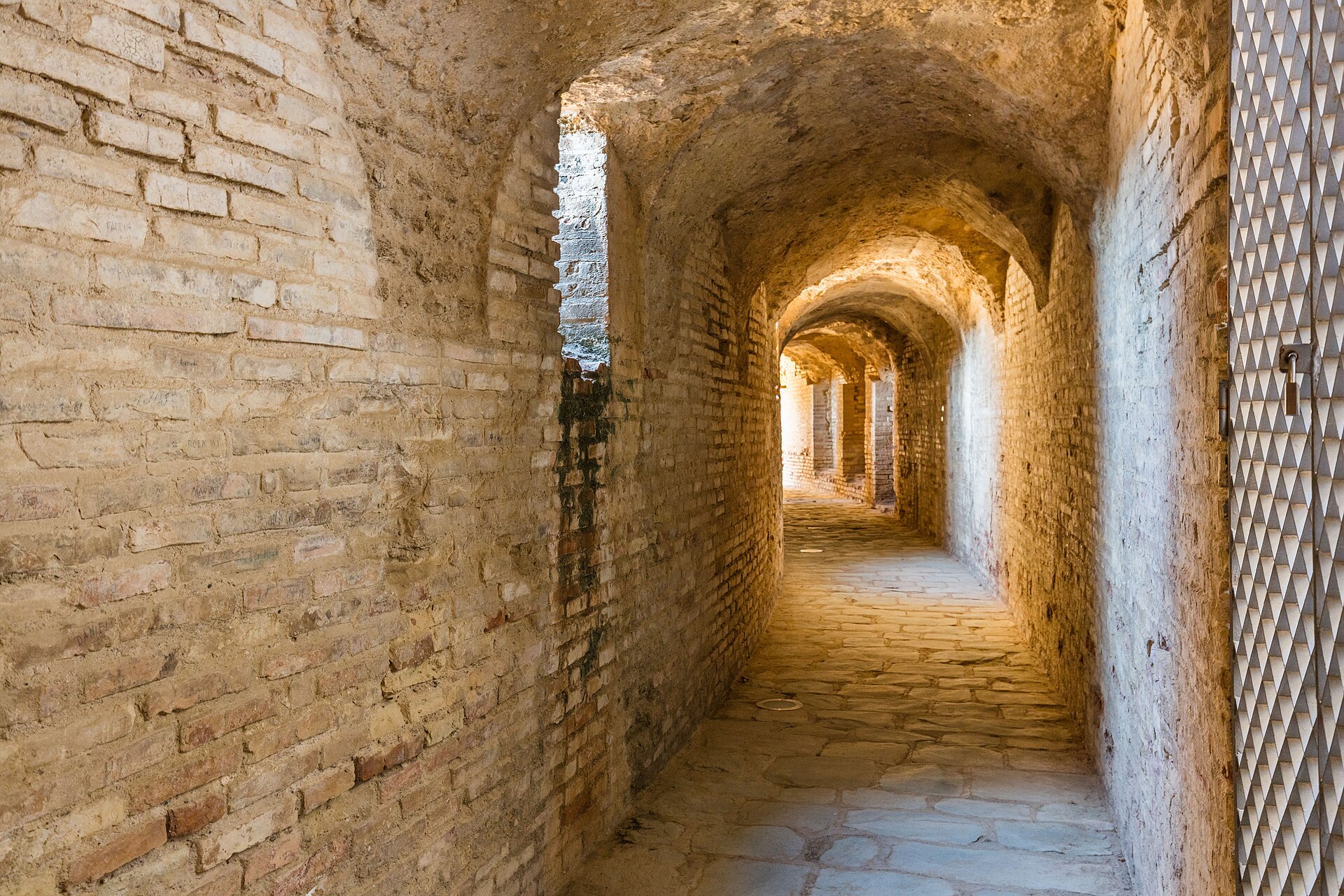
We enter through the amphitheatre, preserved well enough that we can still make our way through the stone corridors encircling it. We know so little about this place, and yet it feels familiar. The theatre stands outside the city walls; within them lie public baths, temples—including one dedicated to Venus—a grand theatre, the Forum, and the two familiar main streets, the Cardo and the Decumanus Maximus.
We could be anywhere in the Roman world.
Then comes a question: Why is this city here?
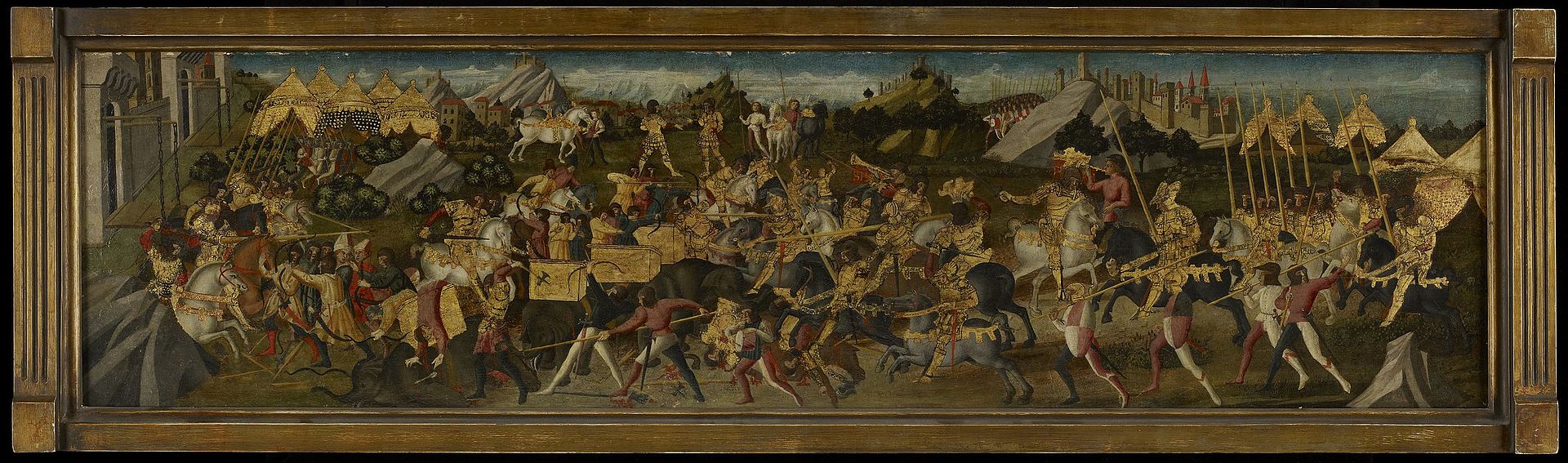
Scipio
We need to talk about Carthage, because it lies at the heart of this story.
Carthage is one of the richest and most powerful civilizations in the ancient Mediterranean. By 206 BC, Rome and Carthage have been fighting in Spain for years. Rome is prevailing, but it is exhausted. The young Roman commander Publius Cornelius Scipio has driven the Carthaginian armies from Hispania after his decisive victory at Ilipa. Four years later, in 202 BC, he defeats Hannibal at Zama and becomes known forever as Scipio Africanus.
Victorious. Honoured. Celebrated.
At Italica, Scipio settles wounded soldiers and Italian veterans who fought beside him. The historian Appian tells us that, after Ilipa, Scipio left them in a town he named Italica for Italy. Livy also preserves glimpses of Roman soldiers forming families with local Iberian women. This was more than a military encampment or a commander’s reward. It was Rome taking root in Spain.
Centuries later, Italica would give Rome two emperors, Trajan and Hadrian. It thrived. The veterans, their wives, and their children did not merely occupy Hispania. Together they began creating a Roman world far from Rome.
As a boy, I thought history belonged chiefly to famous names and decisive battles. Standing at Italica with Mary, among streets made for veterans, wives and children, I understood something quieter. Rome travelled through households as well as armies. It took root because people stayed, married, raised families and made a distant place their own.
Another Roman would unknowingly preserve a different part of Scipio’s world.
Enter Cicero.
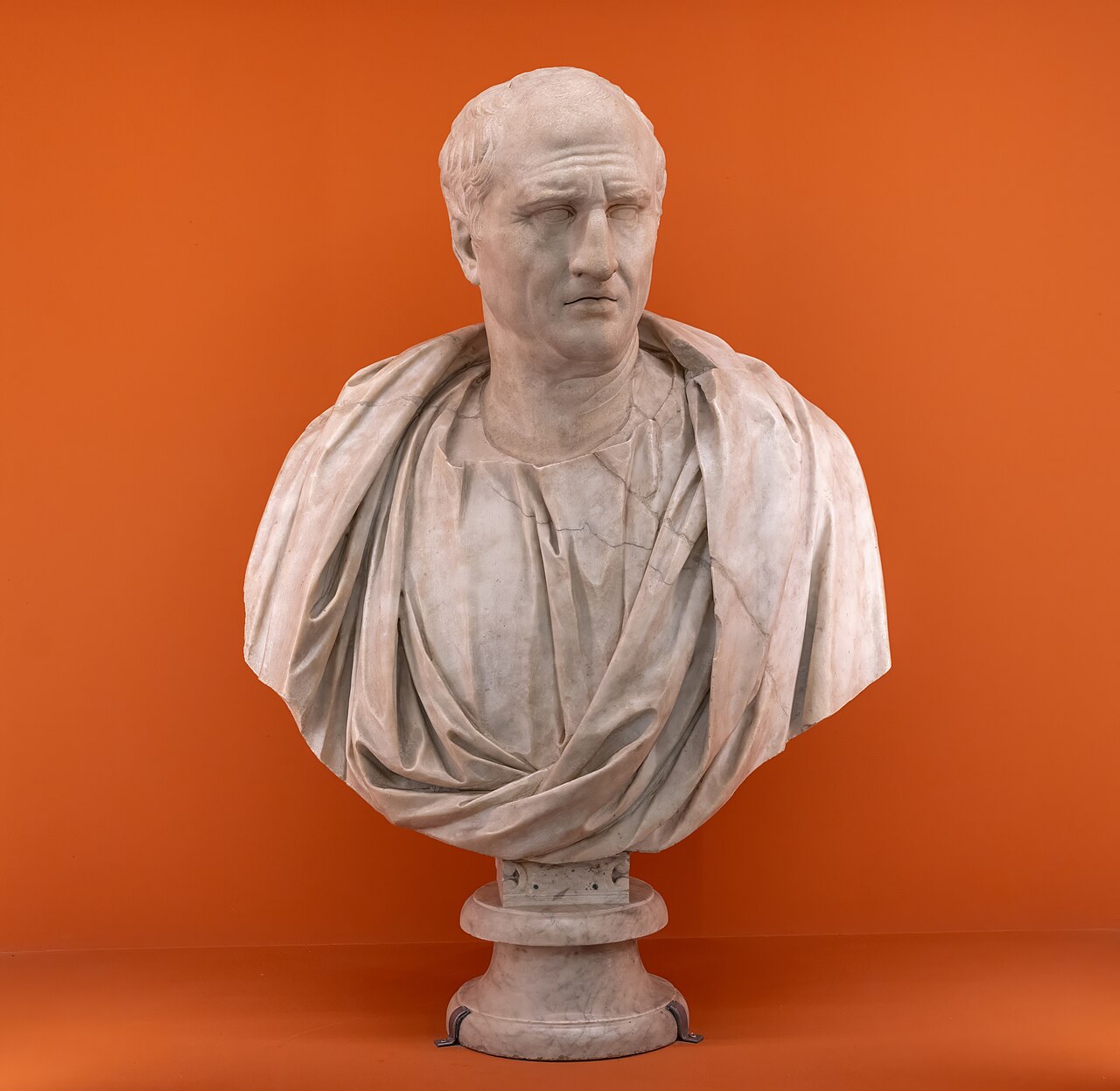
Walking with Cicero
Let us walk with him. He will show us another essential piece of the puzzle.
Marcus Tullius Cicero was a statesman, orator, philosopher and scholar. Mary Beard, the classicist and author of SPQR, has called him brilliant—and perhaps the wittiest Roman who ever lived. You would probably enjoy a walk with him.
I first met Cicero as a name in a book, one name among hundreds that caught the attention of a curious boy. I could not have known that decades later I would still be following him—through speeches, letters and philosophical conversations—listening for the living man inside the marble reputation.
We step inside Cicero’s philosophical dialogue De Re Publica.
Gaius Sulpicius Gallus recalls an evening at the home of Marcus Marcellus. There Gallus demonstrated a mechanical celestial sphere that reproduced the movements of the sun, the moon and the five planets then known.
Marcellus’s grandfather had brought the device home after the Roman capture of Syracuse in 212 BC. Amid the enormous spoils available to him, this was the one object he chose to keep for himself.
Cicero tells us it was built by Archimedes.
If that is true, we are in for an astonishing revelation.
Archimedes
Archimedes of Syracuse was a Greek mathematician, engineer and man of extraordinary gifts. Syracuse, on the southeastern coast of Sicily, was a wealthy Greek city and a Mediterranean power.
This was Archimedes’ home.
What was he like?
Our friend Plutarch tells us that Archimedes was perpetually enchanted by his familiar siren—geometry. He would forget to eat, drink or care for himself. Sometimes he had to be carried to the baths, where he continued drawing geometrical figures with a finger on his oiled skin, transported by his science.
Now, do not stare. But look: he is over there.
Descending into the bath, he floats on his back, pondering a request from King Hiero.
Now when we go to the baths, people laugh and shout ‘Eureka!’.
This is the part of the story I enjoy telling Mary: not only the theorem, but the distracted man in the bath, so completely absorbed that the ordinary world falls away. The human detail brings the geometer close. Genius, for a moment, becomes a person we can see.
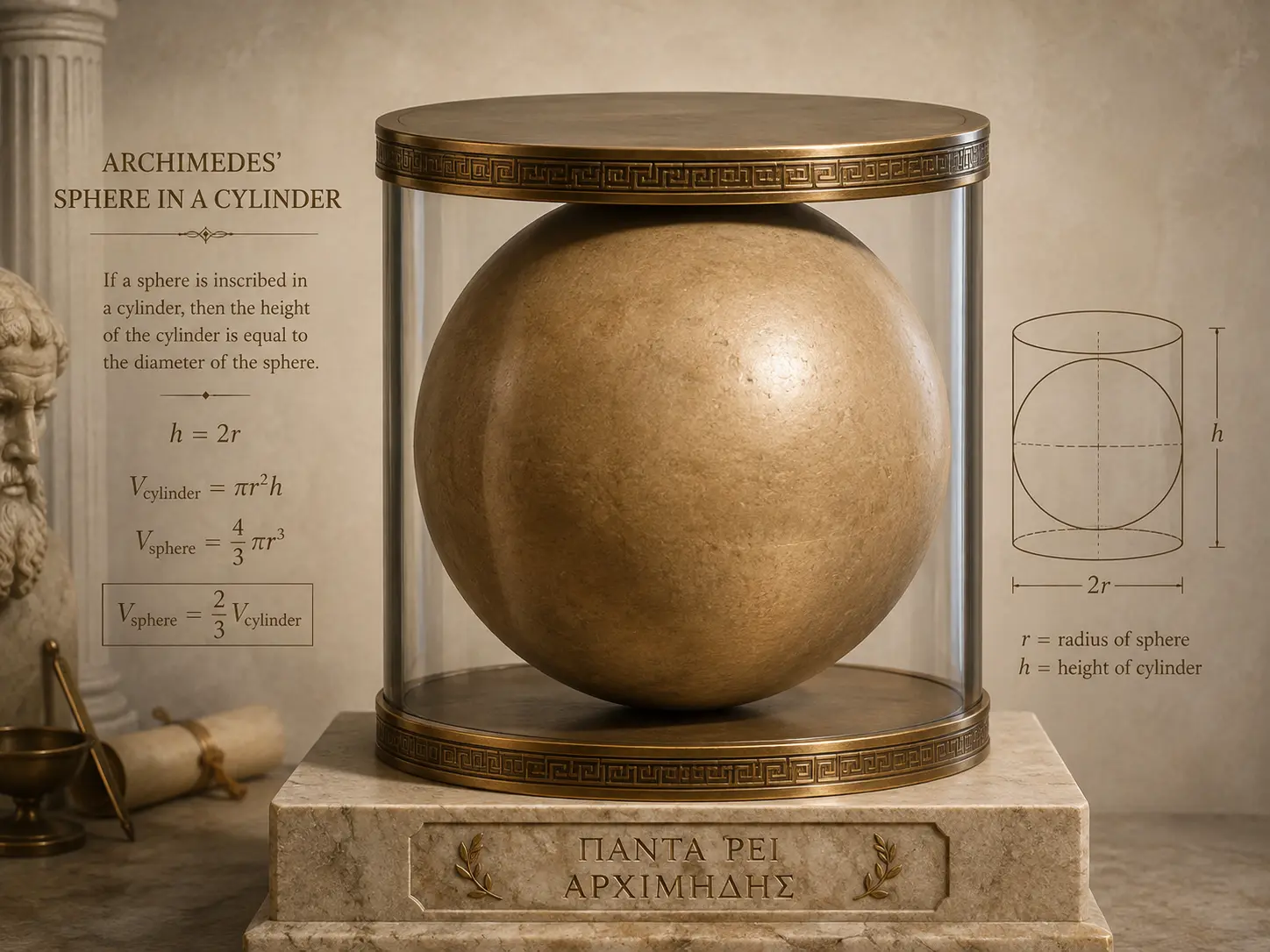
Archimedes established fundamental relationships among circles, spheres and cylinders. He showed us that the area of a circle equals pi multiplied by the square of its radius, and that the volume and surface area of a sphere are each two-thirds those of the cylinder enclosing it.
According to tradition, he valued this discovery so highly that he asked for a sphere and cylinder to be carved on his tomb. Do not disturb my circles.
His genius was not confined to peaceful geometry. When Roman warships attacked Syracuse, Archimedes designed engines that hurled missiles and grappled with ships. Plutarch describes a crane-like device capable of lifting a vessel by the bow before dropping or capsizing it. The Roman commander Marcellus compared Archimedes to Briareus, the hundred-handed giant, and complained that the geometer used Roman ships like cups for ladling water from the sea.
Marcellus had attacked the city with an enormous floating siege ladder called the sambuca. Archimedes answered machinery with machinery.
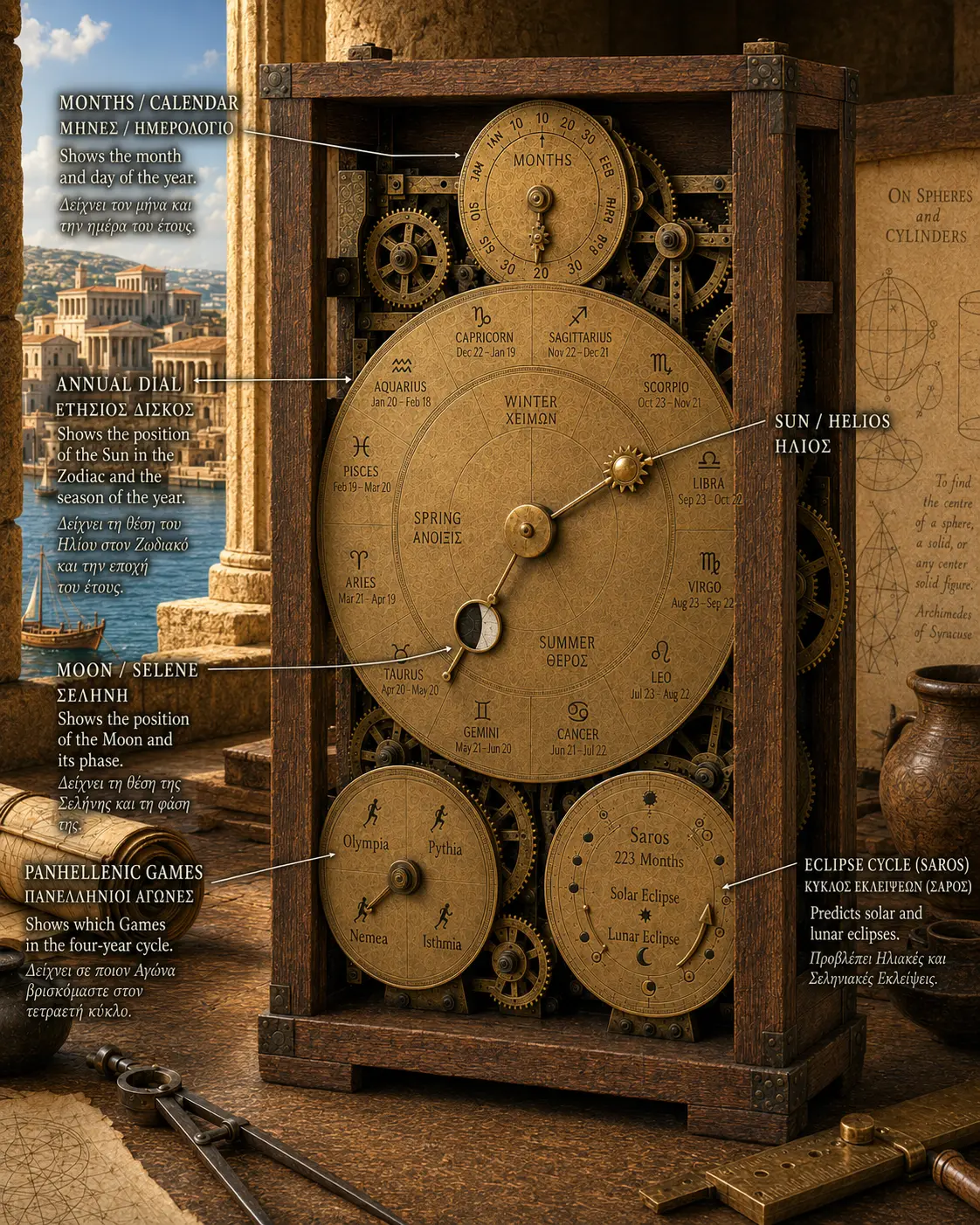
Cicero marvelled at him for another reason. In De Re Publica - and later in the Tusculan Disputations - he described a celestial sphere in which one turning movement reproduced the different courses of the sun, moon and planets. The device could show the moon entering Earth’s shadow and the moon passing before the sun: lunar and solar eclipses rendered by mechanism.
‘Give me a place to stand,’ Archimedes is said to have declared, ‘and I will move the world.’
Then our story shifts again.
Archimedes dies. Syracuse falls. The celestial sphere travels to Rome.
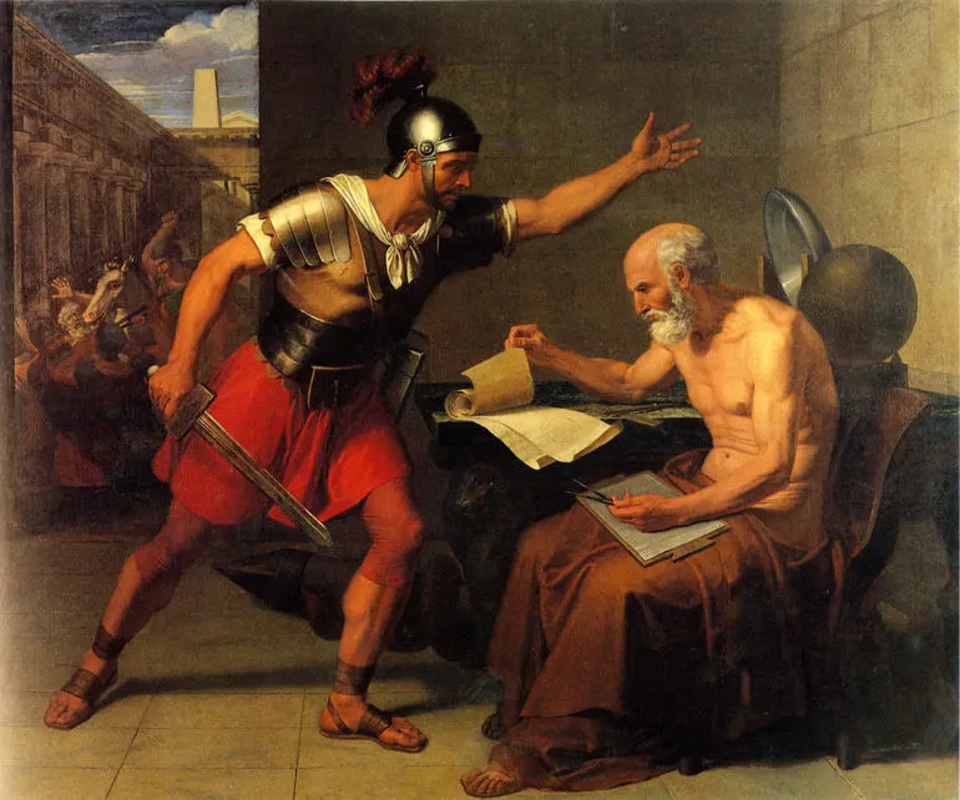
And, eventually, the mechanism disappears from history.
Antikythera
Come with me now. We are approaching the heart of the matter.
It may be best to bring your diving suit. This is deep.
Two millennia have passed—longer than the Roman Republic and Empire combined. The year is 1900. A small group of Greek sponge divers from the island of Symi, led by Captain Dimitrios Kontos, plans to work off the coast of North Africa. A storm drives them off course, and they take refuge near Antikythera, the small island between Crete and the Greek mainland.
While they wait, a diver puts on a rubberized-canvas suit and a domed helmet of copper and brass. Apart from a rope, his only connection to the boat is an air hose supplied from the surface. He drops some forty-five metres to the seabed and searches for sponges.
Suddenly, he signals to be hauled up.
He surfaces terrified, gasping that he has seen dead bodies and a dead horse. Curiosity overcomes the captain, who descends and returns with a bronze arm. The ‘bodies’ are statues - marble and bronze figures scattered across an ancient shipwreck.
The captain and his crew help the Greek navy and the National Archaeological Museum in recovering the cargo. The ship carried magnificent works of art, including the bronze Antikythera Youth, a masterpiece dating from the fourth century BC. The wreck itself belongs to the first century BC; nothing recovered from it is later than the middle of that century.
Among the treasures is a green, corroded lump of encrusted bronze. It is placed in a box at the National Archaeological Museum in Athens. It sits. Time passes.
Then someone notices a gear—and everything changes.
That neglected lump of bronze takes me back to the library. A book can wait silently on a shelf until someone opens it; an object can wait in a museum box until someone learns how to look. The discovery is not only what survives. It is the moment a patient eye recognizes what has been there all along.
The Ancient Computer
Archaeologists, historians and scientists have identified the Antikythera Mechanism as an astronomical calculating machine.
Professor Tony Freeth, a British mathematician and Honorary Professor of Mechanical Engineering at University College London, is a leading member of the UCL Antikythera Research Team. He describes the Antikythera Mechanism as a Greek analogue computer more than 2,000 years old.
Go deeper: Professor Tony Freeth discusses the Antikythera Mechanism with historian David Miano of World of Antiquity. Watch on YouTube https://www.youtube.com/watch?v=idVf2eJxcXU
In 2005, Professor Freeth organized the initiative to bring an 8-ton, high-resolution microfocus X-ray CT scanner to the National Archaeological Museum in Athens to study the mechanism.
This revealed thousands of hidden Greek characters engraved on the inside plates. These allowed researchers to decode the computer’s use of a 223-month Babylonian cycle to predict solar and lunar eclipses, track the 19-year Metonic calendar, and mark the cycle of the Panhellenic Games. The Olympic and Pythian Games followed four-year cycles; the Nemean and Isthmian Games were held every two years.
It explains why Cicero suddenly makes sense. Today.
Cicero had seen devices attributed to Archimedes. For the Antikythera Mechanism, Tony Freeth argued that it belongs to a technological tradition in which Archimedes may have played a formative part. Behind the surviving object lie many workshops, many craftspeople and generations of accumulated knowledge.
The sea preserved what time and human need would otherwise have destroyed: statues, inscriptions, gears—and evidence of a world capable of imagining the heavens as a machine.
Return to Italica
Now we read Cicero again, and every sentence means something different.
He was not merely repeating a fantasy. He was describing an object that stood before him: a machine capable of bringing the movements of the heavens into a Roman room.
That is an astonishing moment.
It is the kind of moment Mary and I have learned to treasure on our Roman walks: the instant when a ruin, a sentence or a small surviving object stops being remote. The ancient world looks back. For a moment, the distance between their lives and ours becomes very small.
Then we return to Italica, back where we began.
Scipio built a city.
Archimedes built a machine.
Cicero preserved their worlds in words.
Archaeology returned those worlds to us.